FreeSemantic segmentation

Semantic segmentation labels, made in your browser

Mark each region and give it a class, then export masks and label maps: one PNG of object ids, one of class ids that stay the same in every photo, and a legend. Built for training segmentation models.

Drop your photo hereIt opens in the editor. Nothing is uploaded. Choose a photoJPGPNGWebPHEICPSDRAW

No photo? Try ours

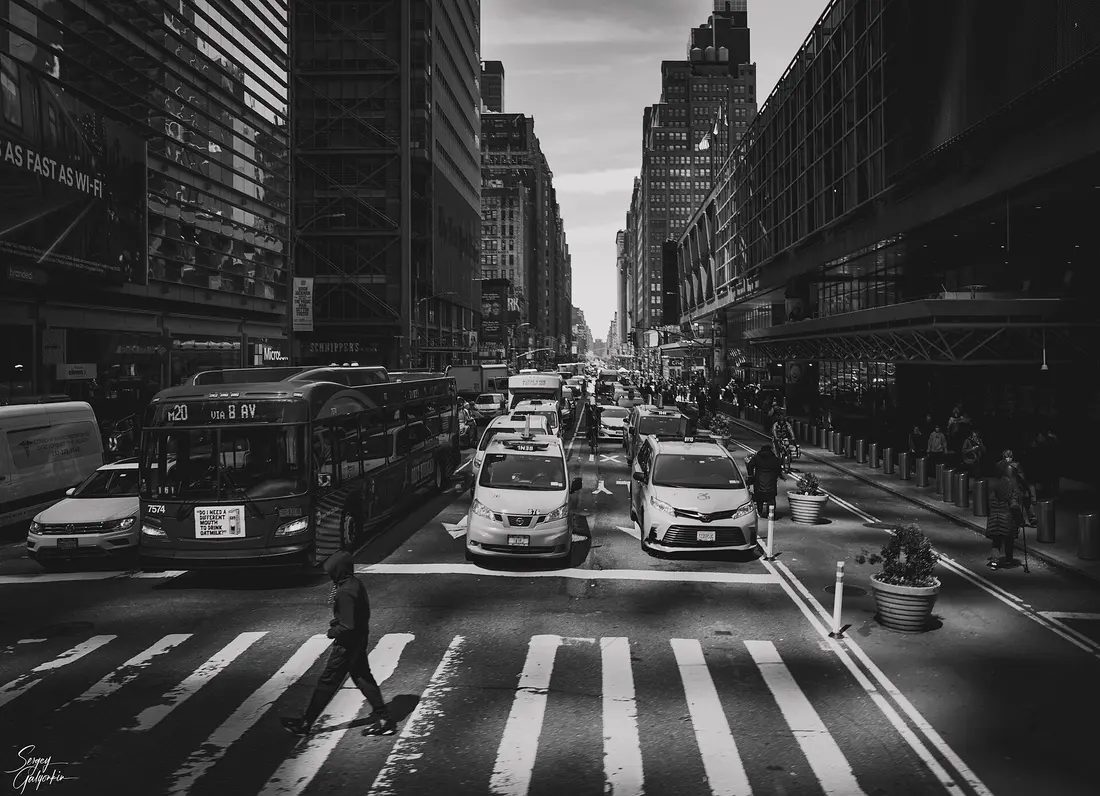
A black and white city street, each region coloured by its class
Tap a class to switch it off
Live demo01 / 05

03Every pixel, one class

Where the pixels go.

Each pixel gets one class, so the shares below add up to the whole photo. The bars come from the map on this page, so you can see what a class is worth before you export it.

  • Building40.2%
  • Road29.9%
  • Vehicle16.8%
  • Sky5.0%
  • Person1.4%
  • Background, unlabelled6.7%

Bars are scaled to the largest class. Figures are for this example only.

03How it works

Three steps. Seconds.

  1. 01Open the imageUse a photo or a frame that shows the scene you want to label.
  2. 02Cover each regionTrace each region with the lasso or the Pen, or use AI select (Pro). Give regions of the same kind the same class name.
  3. 03Export the labelsDownload the masks and the index label map with its legend (label maps are a Pro export).

04Why CutLift

Built to be the best one

  • One index per pixelThe label map stores the number of the object under each pixel, with 0 for background, and a legend that names it.
  • Masks per objectExport a black and white mask for each object, so you can check each one on its own.
  • Named classesName a class once in the class bar and use it on every region that needs it.
  • Correct before exportFix a region with Quick Selection or the Pen before you export, so the labels match the photo.

Free and unlimited. CutLift Pro adds batch processing, upscaling, sky replacement and studio exports for $7.99/month.

05The guide

Inside the label map

What the export contains

The label map export (Pro) writes four files for each photo. The first is a greyscale index PNG at the photo’s full size, where each pixel holds a number: 0 for background, then 1, 2, 3 and so on for each object. The second is a class PNG, where each pixel holds its class id plus one. The third is a colour PNG of the object map, so you can check it by eye. The fourth is a JSON legend that lists every object id with its name, class, class id and colour.
From object ids to class ids

The index PNG keeps instances apart: two people in one photo get two different values. The class PNG is the classic semantic segmentation mask, one value per class, and because your class list carries over from photo to photo, a class has the same value in every image of the dataset. One export serves semantic and instance segmentation.

One index map holds up to 255 objects. Where layers overlap, the layer higher in the list sets the pixel, so order your layers with that in mind.

Covering every pixel

Semantic segmentation labeling works best when regions meet cleanly. Large areas such as road, sky or wall are quick with Colour Range or Quick Selection; objects with clear outlines suit the Pen or AI select (Pro). Use Fill holes and Remove specks in the Refine panel so a region has no stray gaps, and turn on Colour layers by class to see at a glance whether every region carries the right class.

Where two regions share a border, draw the second slightly over the first and keep it higher in the layer list, so no pixel between them is left unlabelled. Anything outside all of your layers is 0 in the index map.

Free masks, Pro label maps

Black and white masks, one per object, are free and make a simple segmentation mask generator on their own. The label map, COCO, YOLO and SVG exports are part of CutLift Pro, at $7.99 a month or $47.99 a year, and every account can try one premium download first. The images are labelled on your device and never uploaded.

06Questions

Good to know

What is semantic segmentation?

It is a labelling task where every pixel in an image gets a class, such as road, sky or person. Two objects of the same class share one class name.

Semantic segmentation labels, made in your browser

Free to start. Your photo never leaves your device.

Open the editor

49 more tools

Keep going